
Aphrodisias is one of the most underrated of all roman sites I have visited. Many have heard of Ephesus, but Aphrodisias has it all: a nearly intact stadium, a fantastic agora, beautiful scenery and location but also the mysterious Temple of Aphrodite, the patron god that gives the sight its namesake. Located on the road to Denizli, it is located slightly off the Meander river valley, in which many ancient cities have arisen. The mountains form a beautiful backdrop to the city’s fertile valley. Aphrodisas was in what was called Caria, one of the many ancient cultures (Pisidian, Phrygians, etc) that was swallowed up by the Romans and Muslims over time.


It was famous for its marble artisans, possessing many schools dedicated to this pursuit. The city was famous for its great number of temples and public buildings constructed of this stone. It maintained its independence and security by allying with Rome and being off the main thoroughfare of the Meander valley, hence avoiding marauding armies. It was a relatively small city (10k people) but it’s stadium (30k capacity), Temples (Aphrodite) and festivals made it a popular pilgrimage destination. .


Perhaps the most important aspect of Aphrodisias was its namesake: the sacred prostitution cult of Aphrodite. The world’s oldest profession to the temple was conducted to attract visitors as well as maintain revenue for its upkeep. Sources claim that followers of Aphrodite had to make themselves “available” once in their life to demonstrate their devotion. They would have to stay at the temple until the deed was consecrated, sometimes rather quickly if she was pretty, longer if she was somewhat homely. Some might have been slaves or guilty of adultery, all were female.

The entrance was commemorated by the Tetrapylon, an eight column portal which the visitors would commence their adventure. It was followed by a garden courtyard then forty Ionic columns of the temple itself. Today the Tetrapylon has been reconstructed, giving Aphrodisias a remarkable touch. In later years, the Temple was repurposed to become a church, clearly pagan gods were not accepted after the adoption of Christianity in the 4th century.

Stadium 
Stadium 


Another great attraction to the ruins are of the stadium, the largest and best preserved in Turkey, and possibly the Roman world. Situated astride the east-west perimeter of the city, it was utilized for all the typical functions: chariot races, gladiatorial contests, Christian sacrifices and later, after earthquakes in the 7th century, a theater. It is in remarkable condition, seemingly ready for its next contest. The weather was perfect, so I sat beneath an olive tree, taking in the atmosphere. I talked with a painter, he was traveling with his girlfriend in a van, enjoying the winter weather and creating an oil painting of the stadium.


Other highlights included the Bouleuterion for civic discussions, a large Agora which included a huge, oval pool. There were many examples of the fine stone craftsmanship, theaters and bath houses. Later that night, I ate my first meal indoors in months, and slept next to the highway in the campground.

Kibyria Odeon 
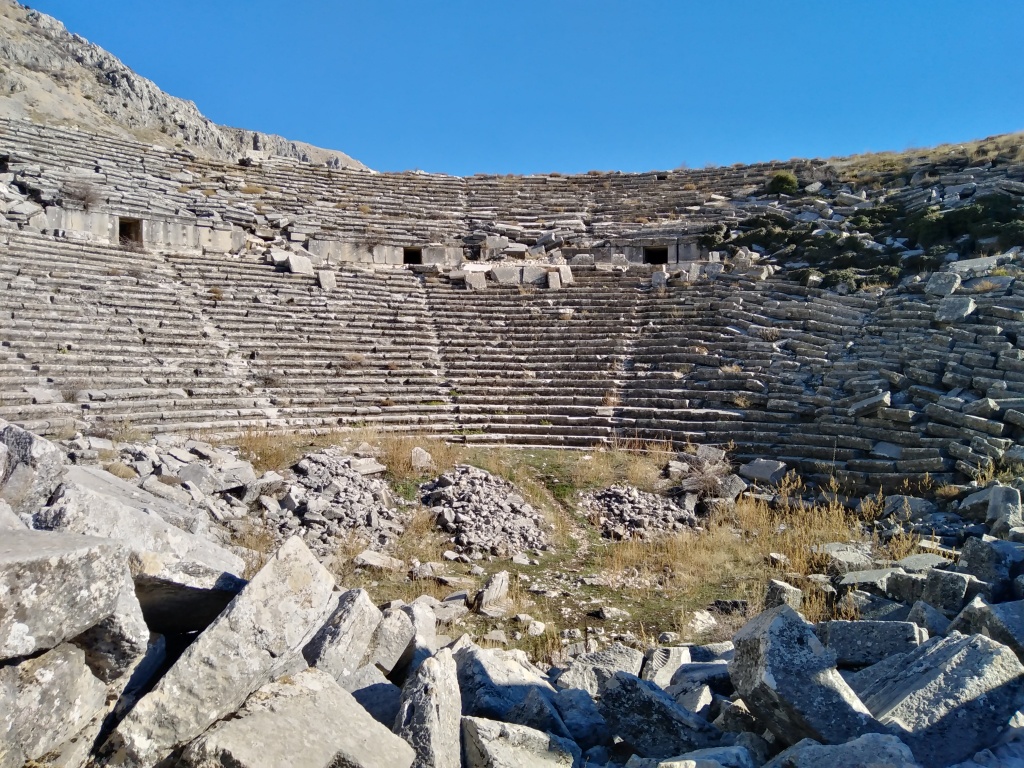
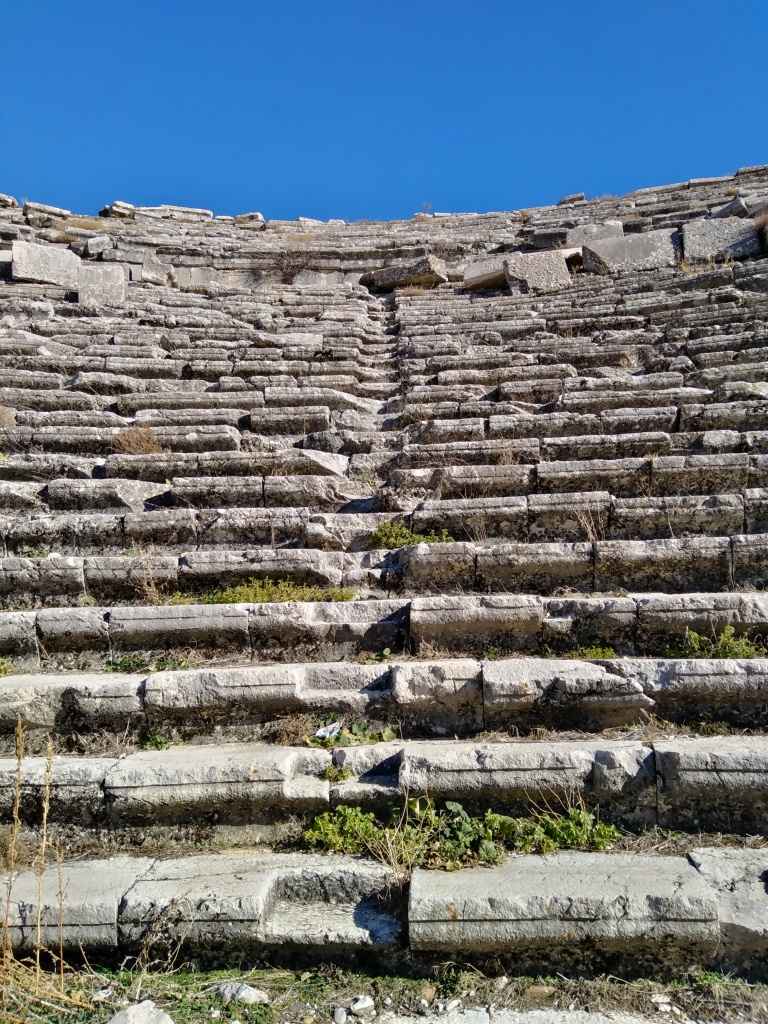
Kibyria Theater 
The following day I visited a great site, albeit not as immense as Aphrodisias,by the name of Kybyria. It was located with a tremendous view of the mountains and Mt. Dag. It had beautiful pine trees, adorned with an outstanding theater and Odeum. Lots to uncover, they are still trying to figure out most of the city’s outline. The town of Golhisar was small and unassuming. But the views were fantastic.





 Student of the world, having visited many foreign lands searching for individuals of intellect.
